Loading...
Serving Chino Hills, CA and surrounding areas. (909) 546-5337
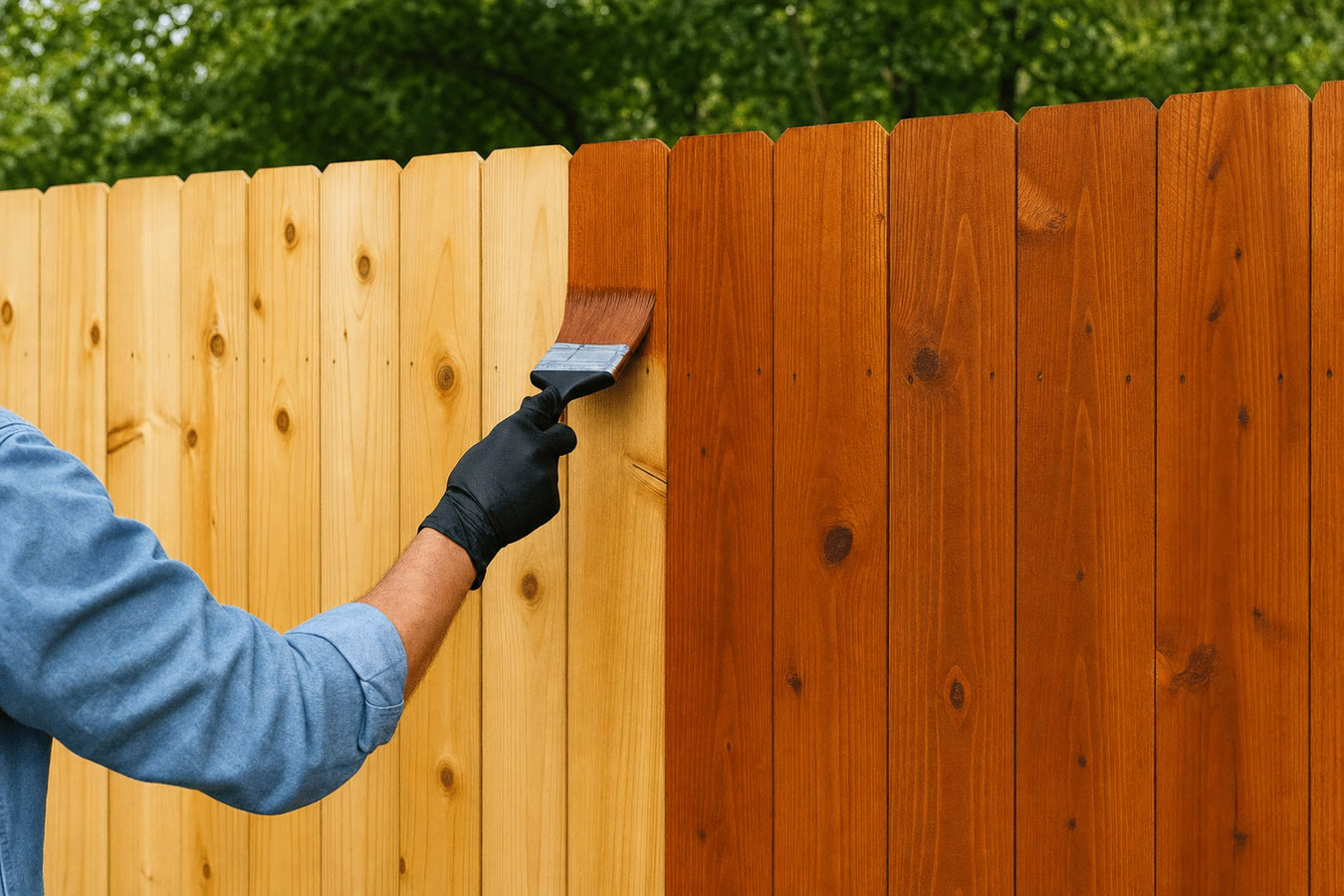
The Inland Empire sun fades and dries out wood faster than most homeowners expect. We clean, prep, and stain your fence with products rated for Chino Hills heat and UV exposure - so the finish lasts, not just looks good on day one.
Fence staining and sealing in Chino Hills, CA protects wood from UV breakdown, moisture penetration, and surface cracking - most residential jobs run 150 to 200 linear feet and take one to two days from cleaning through application.
If your fence is starting to look gray or dull, that color change is not cosmetic. It means the protective finish has worn off and the sun is already breaking down the wood fibers underneath. In Chino Hills, where summer afternoons regularly hit the mid-90s, that process happens faster than in coastal cities - and waiting too long means boards that could have been stained now need to be replaced. We check the wood before quoting so you know exactly what you are working with.
A fresh stain and seal job also pairs well with a broader maintenance check. If we find boards that have started to crack or pull away from the rails, we will flag them before the stain goes on. For fences that have reached the end of their useful life, we can point you toward fence replacement instead. And if you are starting with a new fence, we can help with wood fence installation and have the stain applied at the same time for maximum protection from day one.
When wood loses its natural color and takes on a dull gray tone, the protective finish has worn away and the sun has started breaking down the surface fibers. In Chino Hills, the intense Inland Empire sun can push a fence to this stage faster than homeowners expect - sometimes within two to three years of the last treatment. Once you see gray spreading, it is time to act before the wood starts to crack.
Try this quick test: splash a small amount of water on your fence boards. If it soaks in immediately and darkens the wood, the sealer is gone. If it beads up and rolls off, you still have protection. This test takes about 30 seconds and tells you more than looking at the fence from a distance. It works on any section of the fence, so check the south- and west-facing sides first - those get the most direct afternoon sun.
Small cracks and a rough, splintery texture mean the wood has dried out and started to break down at the surface. This is common on fences that face south or west in Chino Hills, where afternoon sun hits hardest. Staining at this stage can still help, but boards with deep cracks may need to be replaced before the stain goes on - and we will tell you honestly which is which.
Chino Hills clay soils shift with the seasons, and that movement can stress fence boards until they start to bow or separate from the frame. While warping can have structural causes, it is also a sign that the wood has dried out unevenly - which a fresh stain and seal can help slow down. If boards are no longer sitting flat, mention it when you call for an estimate so we can assess whether staining or replacement makes more sense.
Every fence staining job starts with cleaning - no exceptions. We use a pressure washer and, where needed, a wood brightener to remove dirt, mildew, old sealant, and gray weathered fibers so the new stain soaks in evenly. Skipping that step is the single biggest reason fence stains fail early, and we will not rush it to save time. After cleaning, we check wood moisture with a meter before scheduling the application day, because applying product to damp wood causes bubbling and early failure. For fences near sprinkler heads - common throughout Chino Hills - we coordinate around your irrigation schedule so the wood is dry when the crew arrives.
For the stain itself, we match the product to your wood type, fence condition, and HOA requirements. Newer wood in good shape gets a transparent or semi-transparent stain that shows the grain while adding UV protection. Older or rougher wood benefits from a semi-solid or solid stain that hides surface damage while providing stronger coverage. All of our stain selections are rated for high-UV, high-heat conditions - the kind Chino Hills summers deliver. We also handle fence replacement when boards are too far gone to benefit from staining, and we can apply a protective finish to a new wood fence installation right after the posts are set for built-in protection from the start.
Suits newer wood in good condition where the natural grain is worth showing off - adds UV protection without covering the look of the wood.
Suits most residential fences in Chino Hills - adds color and UV protection while still letting some grain show through.
Suits older or rougher wood with some surface damage - covers imperfections while delivering the strongest color and moisture barrier.
Suits homeowners who want maximum water repellency on newer wood without any color change to the fence boards.
Chino Hills sits in the Inland Empire, where summer temperatures regularly climb into the mid-90s and the sun is intense for most of the year. That level of UV exposure breaks down wood stains faster than in coastal cities - meaning fences here often need to be retreated every two to three years rather than every four or five. Not all stain products are formulated to hold up in those conditions, which is why product selection matters as much as prep. We choose materials specifically rated for high-UV, high-heat conditions so your fence keeps its color and protection through the hottest months, not just the mild ones. Homeowners in Chino Hills who have dealt with a stain that looked great in April but was fading by August usually know what we mean - and that pattern is almost always a product mismatch, not bad luck.
The other factor that shapes fence staining here is the clay soil. Much of Chino Hills sits on soil that swells when wet and shrinks when dry, and that constant movement puts stress on fence boards - contributing to the warping and cracking that makes proper sealing so important. Santa Ana winds in fall and early winter are another timing consideration: applying stain on a high-wind day dries the surface too fast and prevents the product from soaking in properly. We check wind forecasts before scheduling application days, because doing it right means doing it once. Neighbors in Yorba Linda face similar conditions, and we bring the same level of preparation to every job across the service area.
We will ask a few quick questions - fence length, material, and whether it has been stained before. Most contractors give a rough range over the phone, but the real number comes after an in-person look. We schedule a walkthrough within a few days. You will receive a written quote that breaks out cleaning, prep, and application separately so you know exactly what you are paying for.
If your home is in one of Chino Hills's planned communities, we ask about HOA color or finish restrictions before any product is selected. Sorting this out before the job starts saves you from redoing work after a board notice. We are familiar with common HOA guidelines in this area and can help you pick a color that passes review without a back-and-forth with the board.
The crew cleans the fence thoroughly - usually with a pressure washer and a wood-brightening solution - to remove dirt, mildew, old sealant, and gray weathered fibers. After cleaning, the fence dries completely, typically 24 to 48 hours. We check moisture levels before scheduling the application day. You do not need to be home, but keep pets and children away from the work area.
Once the wood is dry, we apply the stain - usually by sprayer for even coverage, with brushes used for tight spots and edges. We schedule application for early morning to avoid peak afternoon heat, which dries stain too fast on the surface. After finishing, we walk the fence with you so you can see the result and ask any questions before we leave.
Free written estimate. No pressure. We reply within 1 business day.
(909) 546-5337Not all stains hold up in sustained heat above 90°F and intense UV exposure. We select products specifically formulated for the climate conditions Chino Hills delivers - not generic options that perform well in milder markets. That means your finish lasts through summer, not just until the weather turns.
We check wood moisture with a meter before applying any product. Staining over damp wood - from a recent rain or an irrigation cycle that ran the night before - causes the finish to bubble and peel within months. This step adds time to the schedule and we do not skip it. It is the difference between a finish that lasts two to three years and one that fails in six months.
Chino Hills has dozens of active HOA communities with specific fence appearance rules. We know the common guidelines in this city and help you choose a stain color that passes HOA review without back-and-forth. We recommend getting written HOA approval before any product is purchased - and we can help you prepare what you need to submit.
Staining over cracked, warped, or rotted boards hides problems and wastes money. Before any stain goes on, we walk the fence and flag boards that need to be replaced first. You get a straight answer on what can be stained versus what needs to come out - and you can make an informed decision before we start. The Western Wood Preservers Institute publishes guidance on wood treatment standards that informs how we assess fence condition.
Together, these practices mean the finish we apply actually lasts - not just on day one, but through the full cycle of Chino Hills summers, Santa Ana wind seasons, and clay-soil shifts that test every fence in this city. We give you a written quote, stick to it, and do not consider the job done until you have walked the fence and signed off.
When staining is no longer enough, we remove the old fence completely and install a new one - posts, rails, panels, and all.
Learn MoreNew wood fence installation with the option to apply a protective stain or sealer at the time of install for immediate weather protection.
Learn MoreSpring booking slots fill quickly - call or send a message today and we will get your fence assessed before the summer heat arrives.