Loading...
Serving Chino Hills, CA and surrounding areas. (909) 546-5337
Stop feeling watched in your own yard. A properly installed privacy fence gives you a space you can actually use, and we handle the permit and HOA approval so you do not have to.
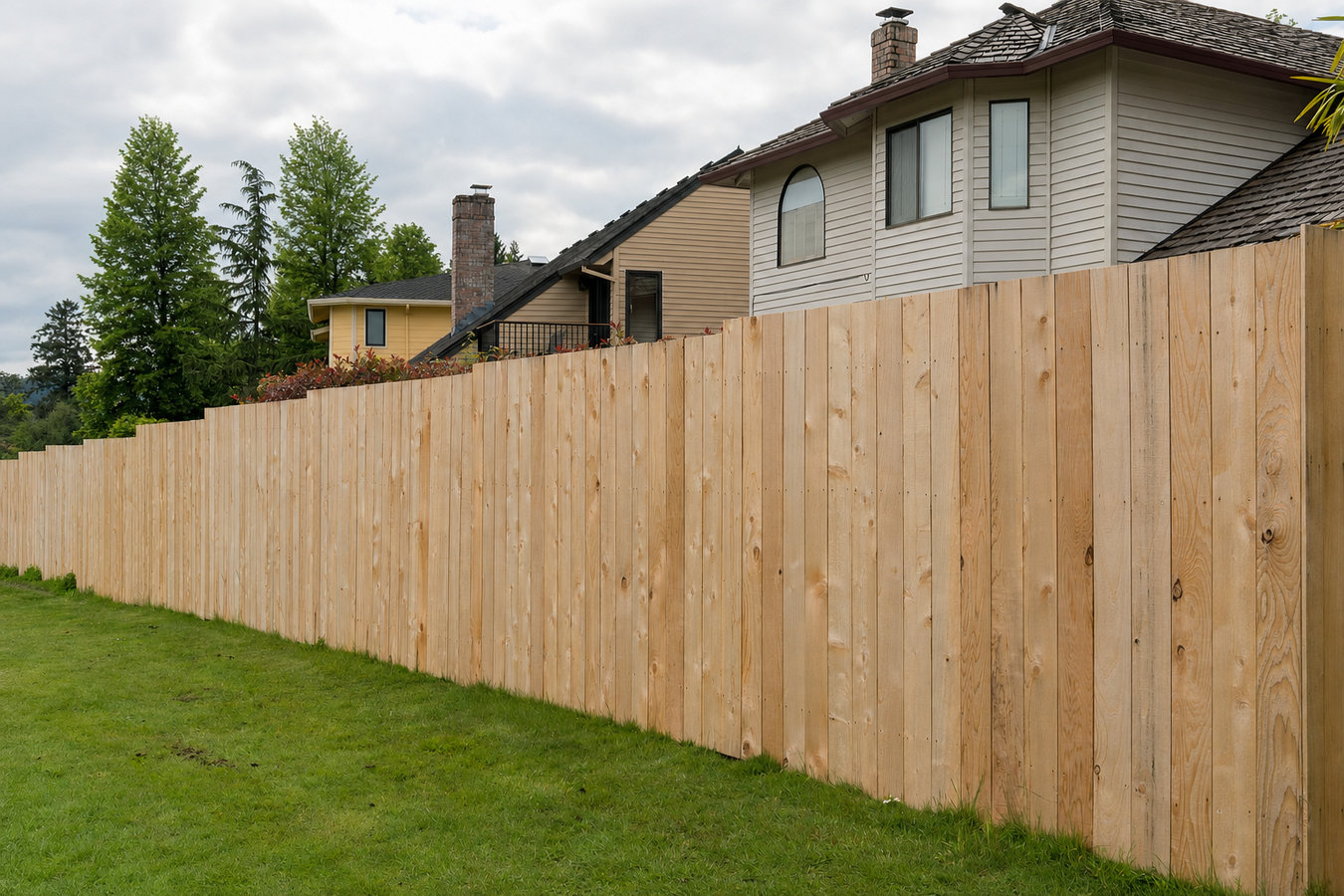
Privacy fence installation in Chino Hills means a solid barrier - usually 6 feet tall - built along your property line to block the view into your yard, with most residential jobs completed in one to three days once the permit is approved and HOA sign-off is in hand.
The most common material choices are wood and vinyl, each with different costs and maintenance requirements in the Inland Empire climate. Wood looks warm and costs less upfront, but Chino Hills heat accelerates wear without regular sealing. Vinyl holds up better in the sun and resists termites, making it a popular choice in many of the city's HOA communities. If your existing fence has damage beyond cosmetic issues, our fence repair team can assess whether replacement or repair is the smarter path before you commit to a full installation.
If you are drawn to the warmth of a wood fence and want a natural look that complements your landscaping, our wood fence installation service covers everything from material selection to HOA coordination. We can also advise on the right sealant for the Chino Hills climate to keep it looking good for years.
If you can see directly into your backyard from the sidewalk, or neighbors can look in from second-story windows, you have no meaningful privacy. This is common in Chino Hills neighborhoods where homes were built close together and two-story houses are the norm. A privacy fence gives you back your yard as a usable space.
Push gently on your fence posts. If they wobble or if the wood feels soft and spongy at the base, the fence is past its useful life. In Chino Hills, the combination of intense summer heat, occasional heavy winter rains, and shifting clay soil accelerates fence wear faster than in milder climates.
If your current fencing has gaps, is too short, or has sections a dog could push through or a child could squeeze past, it is not doing its job. A properly installed 6-foot privacy fence with no gaps at the bottom gives you a yard you can actually let kids and pets use without constant supervision.
In Chino Hills HOA communities, aging or non-compliant fences sometimes trigger formal notices from the association. If you have received a letter asking you to repair or replace your fence, acting promptly avoids fines. This is also a good moment to upgrade to a material your HOA prefers - often vinyl or a specific wood color.
We install both wood and vinyl privacy fences throughout Chino Hills, and we start every project by understanding your HOA requirements before recommending a material. Many associations in the city prefer vinyl or have specific approved colors, and knowing that upfront saves you from falling in love with a design that gets rejected at the architectural review. For homes where the existing fence has isolated damage, we also check whether our fence repair service is the right first step before committing to a full replacement.
Beyond the fence panels themselves, we handle gates - from a simple wood gate to a vinyl gate with a key-lockable latch for households with young children or dogs. If your yard has a slope, we discuss whether stepped or racked installation fits your terrain and what each approach means for gaps at the bottom. We also advise homeowners whose property is near open hillside on material choices that minimize fire risk. The same team that installs your fence handles the permit, the HOA paperwork, and the wood fence care instructions so everything is in one place.
Best for homeowners who want a warm, natural look and are comfortable with periodic sealing to handle the Inland Empire sun.
Right for yards that need a low-maintenance option or where the HOA specifies a material that resists fading and termites.
Suited for Chino Hills properties with grade changes - we discuss stepped versus racked options and what each means for gaps at the base.
Added to any privacy fence project - wood or vinyl, single or double, with hardware options that work for kids, pets, and security.
Chino Hills was largely developed as a master-planned community in the 1980s and 1990s, and a significant portion of its neighborhoods fall under HOA jurisdiction with rules about fence height, material, and color. Getting written HOA approval before applying for a city permit is not optional here - it is the step that determines whether the fence that goes in can stay in. We have worked in enough Chino Hills associations to know what most are likely to approve and how to put together an application that moves through the architectural review without unnecessary back-and-forth.
The city's clay soil and hilly terrain add another layer that matters on installation day. Clay expands and contracts with seasonal moisture changes, which means posts need to be set deeper and in the right concrete mix to stay straight over time. Many yards in Chino Hills also have sloped lot lines that require careful planning before the first post hole is dug. Homeowners in Diamond Bar, CA and Yorba Linda, CA face similar HOA and terrain conditions, and we bring the same local depth to those projects as we do in Chino Hills.
We ask a few basic questions upfront - fence length, material preference, and whether your neighborhood has an HOA. This helps us arrive prepared and give you a more accurate estimate. You hear back within 1 business day.
We walk your fence line, take measurements, and check the terrain for slopes or roots that affect installation cost. We ask about your property line and flag any permit or HOA requirements before quoting so there are no surprises.
If your neighborhood has an HOA, we help you understand what your association is likely to approve before submitting. Once HOA approval is in hand, we apply for the city building permit - a step that typically takes one to three weeks in Chino Hills.
Posts are set in concrete and allowed to cure before rails and panels go up. Gates are hung last and adjusted until they swing and latch correctly. Before the crew leaves, we walk the fence with you to confirm everything is right.
We handle the HOA approval and city permit. You just describe your yard and we do the rest.
(909) 546-5337We handle HOA approval as a first step - before the permit, before materials are ordered. This means the fence that goes in is the fence that stays in, with no costly tear-outs because of a missed association requirement.
Chino Hills clay soil shifts with wet and dry seasons, and the Inland Empire sun is harder on fence materials than most homeowners expect. We size post holes and choose materials specifically for these conditions so your fence is not leaning or fading two summers from now.
We apply for the Chino Hills building permit and coordinate with the city. You do not visit city hall or track down paperwork. When the job is done, you have a permitted fence that protects your home's value and avoids problems at resale.
Parts of Chino Hills are in designated fire hazard zones. If your property is in one of those areas, we discuss material options honestly - including non-combustible alternatives - so you are not trading a privacy problem for a fire risk.
You can verify any California contractor's license at the California Contractors State License Board in about two minutes - we encourage it. For homeowners in fire-risk areas of Chino Hills, the CAL FIRE Fire Hazard Severity Zone map is a useful starting point for understanding whether your property is in a zone where material choices matter beyond aesthetics.
Before committing to full replacement, a repair assessment can identify whether targeted fixes to posts or panels will restore your existing fence.
Learn MoreFull wood fence installation for homeowners who want a natural look and are comfortable with periodic maintenance in the Inland Empire climate.
Learn MorePermit slots in Chino Hills fill up quickly in spring - call today to lock in your project before the next availability gap.